Water explained · 3 min read
Reservoirs are starting to recover — what does that mean for the Southwest?
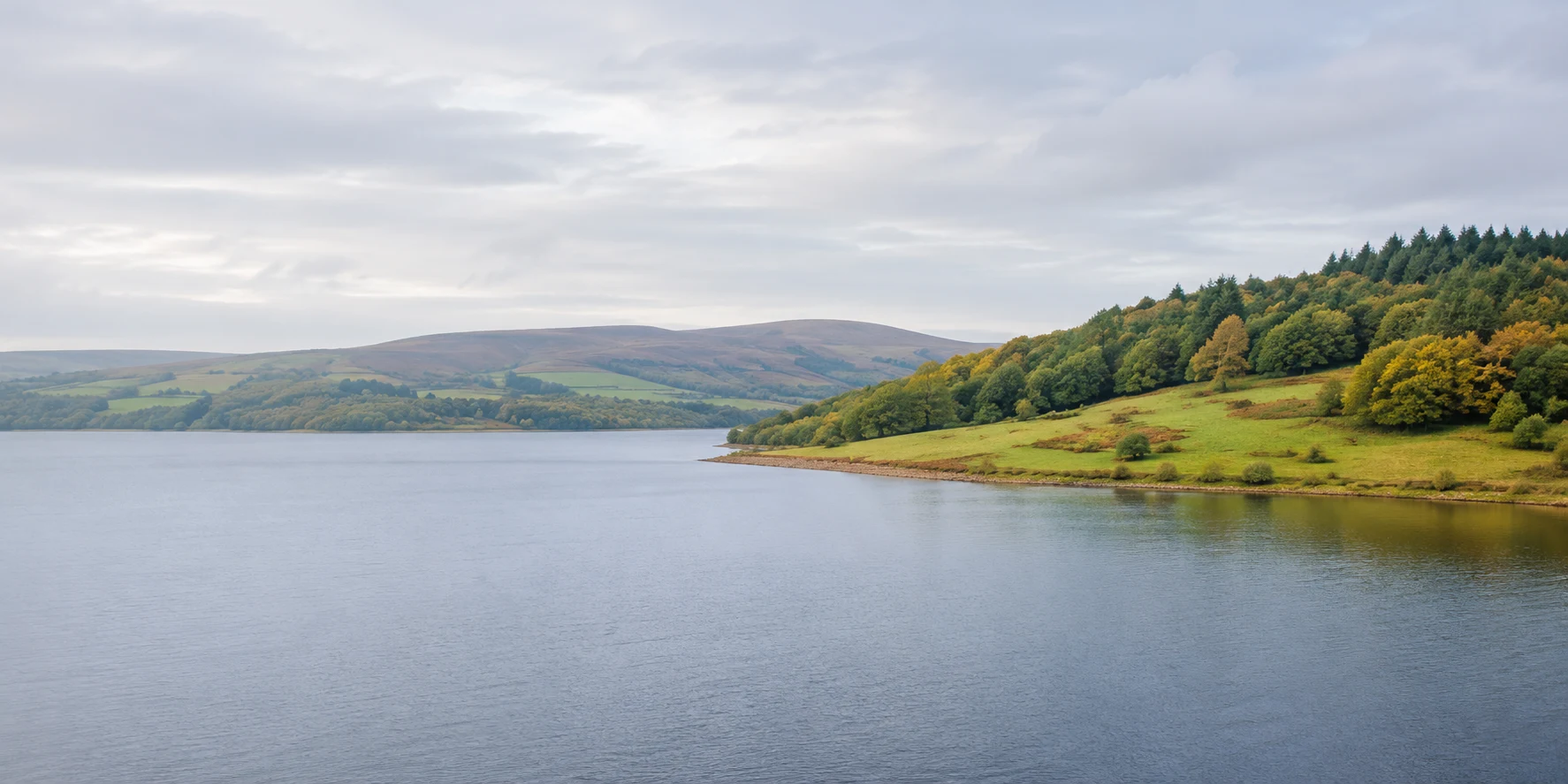
There is some welcome news after a difficult summer: recent rain is helping reservoir storage in the Southwest recover. But a rising waterline is the start of the story, rather than a signal that everything is back to normal.
This is a follow-up to our drought explainer, using information checked on 6 November 2026. The measurements below are dated snapshots, not live readings.
A welcome change in direction
In a BBC report published on 4 November, Pennon drought resilience director Richard Stanbrook described an improving picture across the company’s reservoirs after recent rainfall. His message was encouraging, while recognising that further rain would be important to recovery.
The weather provides useful context. The Met Office’s provisional October summary, published on 2 November, records UK rainfall at 13% above the 1991–2020 October average. England was 12% above its own October average. Those broad figures describe national conditions; they do not tell us how much rain reached an individual reservoir’s catchment.
What the latest local figures show
South West Water reports total reservoir storage of 36% on 3 November, against 52% at the same time last year. Its published individual readings include Roadford at 34% on 3 November, and Colliford at 33%, Wimbleball at 17% and Burrator at 57%, all dated 4 November.
The BBC report gives Wimbleball as 18%. We use the supplier’s dated 17% reading here. Different reporting snapshots can differ; that one-point difference should not be treated as evidence of a subsequent fall.
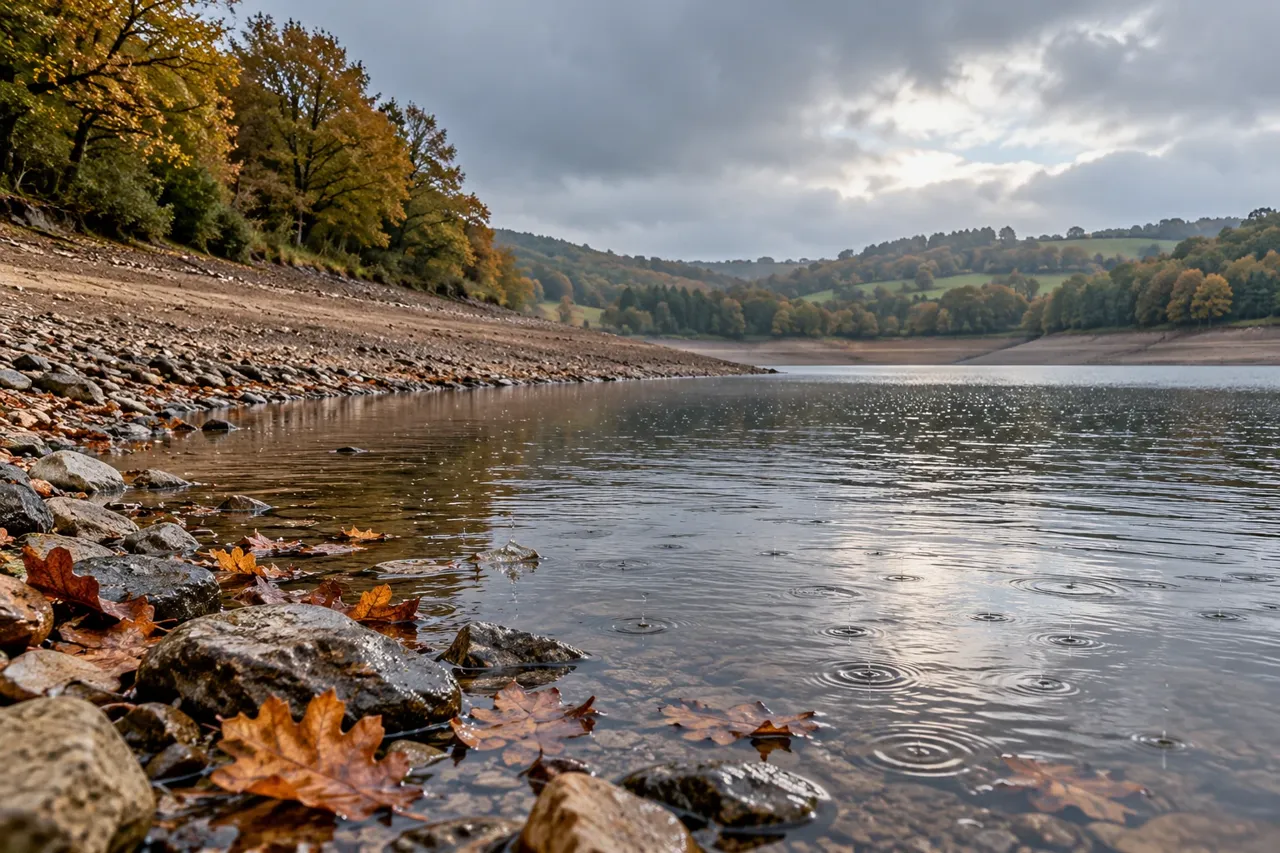
These figures show why a regional total is useful but incomplete. A reservoir with much more water in it can sit within the same supply region as one that is still heavily depleted.
Recovery is uneven
South West Lakes Trust’s separate table, updated on 5 November for the week ending 1 November, gives Upper Tamar as 100% full and Avon as 97%. In that same weekly snapshot, Wimbleball is 17% and Stithians 22%.
Its capacity figures also put those percentages in perspective: Upper Tamar holds about 1,477 million litres at capacity, compared with 21,320 million litres for Wimbleball. A full smaller reservoir cannot, by itself, tell us that the wider system has recovered.
The Trust attributes reservoir monitoring to South West Water, so its table adds useful detail rather than representing an independent set of measurements. Its reporting week also differs from the supplier’s individual daily dates.
Why rain does not immediately end a drought
The Environment Agency’s report for 23–29 October, updated on 30 October, described improving river flows and rising storage at more than two-thirds of the reservoirs or reservoir groups it monitors across England. It also recorded continuing severe drought in parts of Cornwall, Devon, Dorset and Somerset, alongside parts of Sussex.
That report found groundwater still declining at most monitoring sites, with dry soils limiting recharge. Rivers, underground stores and reservoirs can therefore respond at different speeds. A better reservoir reading does not automatically mean every part of the water environment has recovered.
The Met Office’s 2 November summary likewise carried the Environment Agency’s warning that sustained rainfall was still needed. A wetter month is helpful; the pattern over the months ahead will matter too.
What should we watch next?
For Fillumi, the useful questions are straightforward: are levels continuing to rise over successive reporting periods, which reservoirs remain low, and what are the water company and regulator saying about recovery?
Keep checking the date as well as the percentage. Compare the same reservoir over time, and avoid treating a national rainfall total as a local water-supply forecast. For restrictions affecting your home, follow your supplier’s current guidance.
There is room to welcome the improvement while keeping everyday water-saving habits. This is progress worth following — and a reminder that a clearer picture comes from several measurements, not just one reassuring number.
Sources and further reading
South West Water — current reservoir levels; measurements dated 3–4 November 2026
South West Lakes Trust — week ending 1 November; updated 5 November 2026
Environment Agency — dry weather and drought, 23–29 October; updated 30 October 2026
Met Office — wet end to October; provisional monthly statistics, 2 November 2026
BBC News — reservoir levels recovering, 4 November 2026
Have a question about this story? ↗